

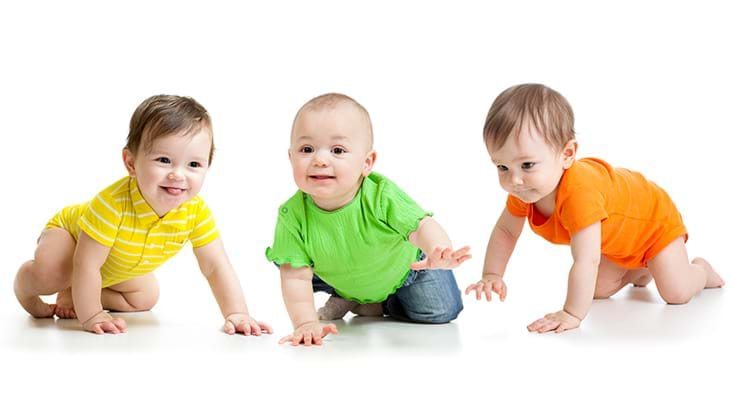
Each milestone of your child is important. So, you should be very vigilant that your baby progresses and achieves the milestones well in time. For that, it is important that you know what milestones are achieved by the baby at what time.
We get so carried away with the excitement of seeing our child grow that we often get confused between milestones. The most confusing milestones are baby crawling and baby creeping, especially when understanding crawling vs creeping becomes important for tracking development.
To help you understand the difference between creeping and crawling, here is a brief explanation of both.
| Feature | Crawling | Creeping |
|---|---|---|
| Movement Style | Tummy (commando style) | On hands and knees |
| Body Position | Belly touches floor | Body lifted off ground |
| Age | 7–9 months | 8–10 months |
| Strength Level | Developing | More advanced |
| Keyword Focus | crawling vs creeping | difference between creeping and crawling |
Most parents wonder if their baby is on track. Typically:
However, every child is different. Some babies may skip crawling and directly move to creeping or walking.
*If your baby is active, alert, and trying to move, there is usually no reason to worry
Baby crawling is the movement when the baby moves around in commando style, that is, tummy crawl. Usually babies start crawling by 7–9 months. Crawling shows that your baby’s upper body is gaining strength and your baby has developed enough strength to pull his or her body forward, which is an important stage in the crawling vs creeping journey.
This is the first independent step of your child. Crawling gives a sense of power to the baby as now they can move around freely to fetch a toy or any item which amuses them. Baby crawling is also a sign of neurological development. Crawling involves multiple skills and lays the foundation before transitioning into baby creeping.
• Motor skills for moving forward, supporting the body weight and maintaining balance.
• Vision skills for looking at and focusing on a target.
• Cognitive skills to map the way to reach the target.
As your baby starts moving, toys like baby cars and ride-ons or baby tri-cycles can encourage active play.
1. For better hand and body co-ordination.
2. For strengthening body muscles and gearing the body for further milestones, like baby creeping, walking, jumping, and climbing.
3. For learning how to balance the body.
4. For developing visual and spatial skills.
5. For learning primitive reflexes.
Providing a safe play environment and age-appropriate toys helps strengthen muscles during this stage.
Many parents worry if their baby does not crawl.
The truth is:
However, crawling helps in:
If your baby shows no movement attempts by 10 months, it’s best to consult a pediatrician.
Most parents do not know that this milestone even exists. They often confuse baby creeping and baby crawling as a single milestone, which leads to confusion in understanding the difference between creeping and crawling. However, baby creeping is the next level of baby development.
When your baby graduates from commando crawl and lifts their body off the floor, that is, crawls on hands and knees, it is known as baby creeping. This stage clearly highlights the transition in the crawling vs creeping phase.
This stage portrays that your baby’s legs, arms, shoulder, and back are well developed. Also, your baby’s primitive reflexes are developing, which will help them have a better balance, posture, and movement.
At this stage, ensuring safety at home with products like stair safety gates for babies becomes essential.
Look for these signs:
These are clear indicators that your baby is preparing for crawling vs creeping stages.
Comfortable clothing and baby accessories can also support free movement during these stages
1. For better co-ordination and body rhythm.
2. For development of fine motor skills.
3. For better visual skills.
4. For better movement and conceptual skills.
Babies enjoy exploring. This new freedom of movement will help them grow physically, mentally, emotionally, and socially. Crawling and creeping also provide them with the assistance to gear up for the next developmental stage, that is, standing. Understanding crawling vs creeping helps parents better support their baby’s growth and recognize the difference between creeping and crawling during these crucial milestones.
Parents can actively support their baby’s development with simple activities:
Encouragement plays a key role in transitioning from crawling to baby creeping.
The main difference between baby crawling and creeping is body position. In crawling, the baby’s tummy stays on the floor, while in creeping, the baby moves on hands and knees with the tummy lifted.
Most babies begin crawling between 7–9 months. However, some babies may start earlier or later depending on individual development.
Babies usually begin creeping around 8–10 months, often after mastering the crawling stage.
Yes, some babies skip the commando crawl and directly start the creeping. As long as your baby is progressing in motor skills, this is generally normal.
While baby crawling helps strengthen muscles and coordination, some babies may skip crawling and still walk normally. However, crawling offers important developmental benefits


Buying a ride-on car for your child can be exciting—but it can also get expensive quickly. If you’re looking for a kids ride-on car under ₹2000, you can still find safe and fun options that offer great value. In this guide, we’ll cover the best ride-on cars under ₹2000
Read More
Diapers are one of the most essential baby-care products—and also one of the biggest recurring expenses for parents. From newborn stage to toddler years, diaper usage can stretch across 2–3 years, making diaper prices a major consideration for families.
Read More
Motherhood comes with beautiful moments—and real challenges. Whether you’re returning to work, need flexibility, or want your baby to receive breast milk
Read More