Gadgets In A Child’s World

My 6 year old is a complete ‘Gadget King’. He is inseparable from his ipad, iphone and PS3. He plays with them effortlessly, whereas I still struggle with the plethora of apps available on my phone. Even an ‘Amazon’ confuses me, but my baby is super comfortable with his ‘gadget friends’.

My friends have always questioned my decision of allowing my son to use an ipad since the age of 1. I have never regretted it. The pertinent question here is that are we, as parents, aware of the pros and cons of our ever growing technology? The task, nonetheless difficult, is not impossible to accomplish. To enable me to do so simplistically, I have created a personal list, which I would love to share with you. Let’s address the negatives first:

**•** Modern gadgets (like video games) cause attention deficit and tend to be addictive, which can cause indiscipline and decreased self regulation. I have experienced it with my son. He, too, throws massive tantrums if kept away from his PS3 for long.

**•** A few video games are quite violent and can lead to aggression in kids.

**•** Decreased physical (outdoor) activity due to long hours spent on these games, can cause obesity, weak eyes and sleep disturbances. We have all experienced this with our kids, “Mum, 10 more minutes with the game please”; ‘Please order a pizza, I am hungry and I cannot leave the game just yet”.

**•** I feel that the greatest disadvantage of these gadgets is that a child’s social skills suffer a big blow. They make friends with these gadgets and ignore human contact.

**•** Kids can lose interest in writing as it seems to be a herculean task (tablets need a tap for everything).

These modern gadgets are the ‘necessary evil’, existing in our lives. We cannot stop using them. So, as a parent; I have laid down a few ground rules:

**•** A constant supervision of the video games my son plays and the programs he watches.

**•** Gadgets are ‘forbidden’ in the bedroom and timelines need to be adhered to, while playing video games.

**•** I talk to my kid and encourage him to talk about the games he likes to play and the programs he watches, so that I understand his psyche.

So now we need to focus on the flipside of the coin; because nothing is ‘all negative’.

**•** My son learnt the letters of the alphabet on his own, thanks to his Ipad. These gadgets can be educative, as they stimulate the child’s imagination and enhance his listening and speaking skills. They make the child competitive.

**•** Interactive games sharpen a child’s reflexes and promote ‘out of the box’ thinking. They also improve the hand-eye coordination.

**•** They are superb stress busters

Friends, excess of anything is bad and the line between the real and virtual world can get blurred. But there is no room for worry. We as parents need to spend some quality time with our children each day, singing, reading and playing outdoor games with them. Technological advancement needs to be welcomed, but with necessary moderation. As for me, I have mastered “Unchartered” on PS3; you guessed it right, my son is my mentor.

7 Tips To Pack A Tasty Tiffin

My son, all of 6 years, completely spoilt, but the one man who makes my heart skip a beat, with his ‘I love you mum’, is an extremely picky eater. The challenge here lies in the fact that I do not credit myself as being a great cook. Yet, I need to ensure that my child gets tasty, wholesome food every day.

Fortunately, a couple of my friends can work magic in the kitchen; and then there is the internet☺, one of the largest reservoirs of information in the present times. The trick here is to whip up a meal that is both yummy and healthy (we, mums… know this). Food is obviously delicious if it appeals to our taste buds. Yet, if I take my son as an example, the food that he would most definitely eat without an iota of persuasion, should also look and smell divine.

 A few easy, yummy recipes for your little one:

**1.** **Chapattis are nutritious** and easy to prepare.

• Make rolls with fillings like cottage cheese, sautéed vegetables, chicken and egg.

• You can use scrambled egg with onions and garlic; steamed and sautéed chicken with onions, garlic and some green pepper.

**2 Idlis are extremely delicious**

• With some readymade batter and an idli maker, yummy idlis are ready in a jiffy.

• My son prefers it with tomato chutney, which is easy to prepare

• Sauté about 2 cloves of garlic in 1 tbsp of oil (olive).

• Cook about 1 cup of chopped tomatoes with it, add some salt and pepper, blend it (once cool)

• Sauté some mustard seeds and curry leaves in ½ tbsp of oil and pour it over the blended mix. The chutney is ready.

**3. Pancakes** are easy to prepare.

• You get the ‘ready to make’ mix.

• Prepare them like ‘cheela’ (refer to the next recipe)

• Serve with honey.

**4** My son loves my **oats cheela**

• I use about 200 gm oats (powdered), 50 gm besan (gram flour), 2 onions, finely chopped, 2 cloves of garlic (paste), and some finely chopped coriander, salt and jeera powder.

• Combine all the ingredients in a bowl. Add some water to make a paste

• Cook it like a pancake

• Dhaniya pudina chatni is an ideal accompaniment. You need about a cup each of chopped coriander and mint leaves, 1 tbsp ginger paste, juice of half a lemon and salt

• Grind them together in a blender and the chutney is ready.

**5** I love to make **cheese and corn pizzas** with slices of bread

• We need about 3 slices of bread, 1 chopped onion, ½ a cup grated cheese, a cup of steamed corn and salt

• Toast the bread and cut it into triangular pieces (6)

• Sauté the onions and the corn, add the cheese and salt to taste

• Butter the bread, spread the sautéed mix on each of the pieces, and microwave for a couple of minutes. Pizza time kids!

**6** ‘Desi’ version of **pasta**

• Cook the pasta in water, with a pinch of salt and a hint of oil

• Once cooked, drain the water and run the pasta through some cold water and put it aside

• Next sauté one chopped onion, 2 finally chopped garlic cloves and 1 tomato in some olive oil

• Then add vegetables to it. You can choose what your child likes. I opt for some chopped carrot, broccoli and corn

• Once the veggies are done, add the cooked pasta to it (I prefer to add only salt to it)

• Once done, garnish it with some grated cheese and coriander.

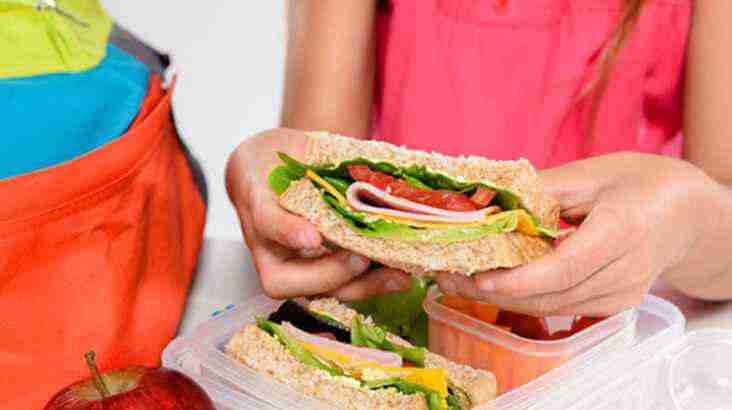
**7** **Sandwiches** are easy to make, too. You can grill them or prepare regular ones with cucumber, tomato and cheese.

The list is endless. I have made my life in the kitchen easier, by chalking out a weekly menu; I follow it totally. So mums, let your creative juices flow. Have fun cooking and your kids will have fun eating☺.

Caring For Your Sick Baby

We all have our fair share of tips, low downs, from our mom, grandmas and others, about quick cures for our sick child; And to add to that, our own experiences teach us loads.

The thumb rule is that if your baby falls ill, the foremost thing to do is to drop everything and focus ONLY on her. Some ‘old fashioned’ mother’s love and care has healed many an ailments. Some parents feel that the baby will, invariably, be fine and think that fussing over her is not a good idea; that fighting illnesses (read infections) naturally, strengthen the baby’s immune system. But I, as a mum to a 6 year old, beg to differ.

Then again, a few of us tend to rush to our paediatrician, at the hint of a sneeze; not a good idea, either. As parents, we need to be able to identify an emergency and act accordingly. Taking care of our sick baby can be exhausting, but it is not impossible (no rocket science!). We need to project and see how we would like to be looked after, when unwell and BINGO! We know what needs to be done.

Now, here is an action plan that I have always adhered to, whenever my bundle of joy is under the weather:

1. The easiest and most effective remedy is REST, complete and uncompromising. God made our babies active, so when unwell, parental intervention is required, to slow them down (quite a task, at least with my son)

2. Build up on your database of illnesses, to understand their individual severity. But then again, quite a bit of this knowledge is acquired over time. Understand cues. Older kids can express themselves, but it is a tough task with babies. So, watch out for signs, like frantic leg movements, cringing (maybe a tummy problem); Howls, screams and incessant crying. There might be irregular bowel movement, vomiting, aversion to food.

3. There is noticeable disturbance in the sleep pattern.

4. Never force feed; an empty stomach accelerates recovery ( keyword: rest)

5. Keep the baby hydrated, at all times. Breast milk worked beautifully for my son. (Consult your paediatrician).

6. Have a competent paediatrician a phone call away and do call her if the fever spikes.

7. Important items of use should be easily accessible, for e.g. diapers, extra clothes, thermometer, medicines and blankets.

8. If you are a working parent, talk to your supervisor; try to take a couple of days off; work from home if possible.

9. If you have a partner, share responsibilities; divide the chores, try and go to office alternately- whatever works best for you.

10. Most importantly, do not fear these times. Looking after your baby also means a lot of bonding time. Please put all your ‘cannot be postponed chores’ aside and just be with your baby.

Last but not the least, the baby is yours, follow your instincts and take steps accordingly. I know my baby and I believe that you know yours, too. ☺

Signs Your Baby Is Having A Growth Spurt

Parenthood is blissful, yet the road that leads to it and goes beyond is never smooth. When I had my baby (he is 6 now), just when I thought that I had established a decent routine for him, of eating, napping and pooping; things invariably went crazy. Yes, the growth spurt had come knocking at my door.

Babies need to grow; we all know that (in leaps and bounds). That is why the growth spurts. There is no timeline for these, but babies generally experience about 5 of these in the first year (initial maybe between week 1 and 3, next between week 6 and 8, then sometime in the 3rd month, 6th month and 9th month). Generally, these last for a couple of days (yippee!!!!).

For me, one of the signs was my son becoming ferociously hungry; his constant demands for milk, 24/7; And, like a typical mum, I freaked out and thought that he is not getting the requisite amount of milk. But no need to worry people, the baby is ABSOLUTELY fine (YES, you are a great parent). So, for breast fed babies, we need to eat well to increase the milk production. One might need to nurse longer than before. I had to, and it made me feel weak at times and crazily hungry at other times. Then, automatically my milk supply upped (Mother Nature☺). Bottle fed babies need to be given more formula. Eventually, the feedings tend to stretch out….yes, the spurt does end friends!

The next significant change is in the pattern of sleep. If previously, the baby slept like an angel, during the spurt, she might wake up more (hunger pangs). So, typically, most babies tend to sleep more once the growth spurt is over. But then again, my son never ever slept more; so, please do not hold me to this. Babies are different in more ways than one.

Another interesting observation that I made with regard to my son was that at each growth spurt, my baby pooped a little less than usual ( Mumsies…I am sure you understand me perfectly!). I concluded that since more food was getting utilised for growth, so lesser wastage.

An obvious side effect of a growth spurt is the baby being a little cranky. The increased requirement for food and a general lack of sleep can adversely affect our baby’s temperament. (Ours, too, if I may add).

I take the liberty to share something. When my son was 21 days old, my husband was out of town, during the initial spurt. I was alone with my baby and kept nursing him for what seemed like forever, yet he seemed hungry (kept howling and screaming). I got so scared that I called my husband and told him to be home that instant. He actually took the next flight home.

Dear parents do not worry, it is a phase and we always survive it. I know these moments are excruciatingly exhausting, but the fact is that our baby is getting bigger, stronger and healthier. A request to all the mothers, do take some downtime, eat well, keep yourself hydrated and most importantly, ask for help (your partner, friends, parents would love to bail you out).

HAPPY GROWING!

Food Recipes For Baby

After feeding my baby milk, milk and only milk 24/7, it was quite a moment when my paediatrician asked me to start solids for my son (the weaning was officially initiated). My first reaction was elation; my baby was growing into a big boy now. But the very next instant, I freaked out. Millions of questions started to pop up in my head. What food would be healthy for my baby; how could I avoid the risk of allergies and various, similarly confusing thoughts.

So friends, everything I have written here includes the information that I have gathered, based on my personal experience. We, as mothers want to provide the healthiest food possible, to our babies. Mums, brace yourselves, from my exclusive database, something yummy for your honey-drop ☺

  1. It is imperative to introduce a single food and let the baby continue with it for at least 3 days. This helps us to identify food allergies if any.
  2. Fruits are the safest to begin with as they aid digestion. I started with mashed bananas for my son. Again, do not mix different kinds of food. The baby’s digestive system can go for a toss. So let us not be over ambitious.
  3. Always remember to start with small portions of food, no over-feeding, as the baby’s digestive system is in the process of developing.
  4. Let your baby explore his food. My son used to get all messy at meal times, but he so loved it and looked forward to his ‘eating and discovering’ moments.
  5. A 6 months old baby needs milk in his diet, too. So solids need to be served between the milk breaks.
  6. Rice cereal is a good option and light on our baby’s small tummy. My son liked it, too. Dalia is great for both mum and baby.
  7. The period between 6 months to a year is a decent time to introduce oats, ragi, sooji and khichdi ( preferably with moong dal).
  8. My son loved cerelac. So, to enhance the taste and make it more ‘power packed’, I added a fruit to it ( mashed papaya, chikoo).
  9. Do not rush the egg, I introduced it only after my baby turned one.
  10. Mashed potatoes have a universal appeal amongst babies. My son still loves to eat it; healthy and awfully delicious.
  11. Ensure that dinner is light on the tummy; anything heavy can cause indigestion and hamper our baby’s sleep (especially for babies who are colic).
  12. Warm milk before bedtime can aid sleep in a few babies. But remember to have a gap of atleast a couple of hours between the two. Thumb rule is to have a light tummy.

Almost forgot, be VERY careful with nuts. So please mums, test allergic reactions before soaking those almonds.

Another important fact that we tend to ignore, once the baby turns a year old, try not to give her pureed or mashed food all the time. The habit of biting and chewing solid food needs to be inculcated in the baby. Try and introduce ‘finger foods’ to the baby now. I mentioned earlier as well that your baby should be allowed to feel the food, to enable her to be an independent eater.

Always remember, each baby is unique. We, as parents need to be observant and sensitive to our baby’s food preferences. So just relax and have fun with your baby, on this road to discovering the world yet again……through her. God bless ☺

Infant Toilet Training: To Do Or Not To Do

*Infant toilet training* is a debatable topic. Some parents find it unnecessary. But some parents (yours truly included), swear by it. A crucial point to be kept in mind is that potty training for a baby is different than the one for an older child. Infants are obviously not expected to go to the restroom independently (they operate on different parameters). Their responses are based on conditioning (responding to a sound or gesture or movement made by the parents).

To enable you to get a clearer perspective of the concept, I have tried to list out a few ‘goods’ and ‘not so goods’ of baby toilet training:

Let us focus on the positives:

1. My mother taught me that potty training, also called elimination communication, is actually communicating with your baby. When my son was about 4 months old, I initiated it with my mum’s help. I helped my baby to pee to a specific sound. It worked beautifully for Maanit (my son) and I. Gradually, as he grew older, he outgrew this conditioning and the process became natural. It was just what I had hoped for. We need to realise that timing makes or breaks the deal. You need to take a call, as a parent, as to when to start. Watch your baby for cues. For e.g. my son had this typical ‘nostril flaring’ look, before the ‘big flow’. Yours would have a specific expression or gesture, too. Identify that and you are ready to roll!

2. The other advantage is that keeping your baby diaper free works well for her comfort, too. She would never complain of diaper rash. So the monetary aspect gets another thumbs up; no investment in creams for the rash (no Gold Seals…had got it for my son).

3. Your relationship with your baby also grows stronger; You need to be around her, observing her. Working parents need to dedicate substantial time for this purpose; weekends and long stretches of time in the evenings, after work.

4. It makes our baby independent…an achievement for her.

A few ‘not-so-positives’:

1. If we are over anxious and start the process before our baby is ready, it can blow up in our face. A new born has no bladder control. She is not aware of her reflexes. Obviously, the exercise would come to a naught. Yet again, the decision is yours and your baby’s. Wait and watch, then decide. Moreover, you need to have time to invest, because toilet training does not happen overnight. It needs perseverance.

2. The other fact is that though our baby seems to be trained, she may, in all practicality, not be so. It just might be our accomplishment as a parent, keeping track of the poo and pee schedules and in deciphering the cues that our baby gives. In such circumstances, you might want to stick to the ‘no diaper’ rule, only when home.

3. You also need to be mentally and physically prepared to handle the mess…yes, accidents happen!

4. Some parents feel that it is the baby’s prerogative to decide when she wants to be diaper free.

Toilet training working or not, is very relative. It depends upon what we expect from it. If we intend to save money (diapers cost a bomb), want our babies to be independent and believe in hygiene, then it will definitely succeed. ☺

Positive Parenting

We all know the universal truth that it is extremely easy to have an opinion about Mrs. And Mr. X’s parenting style, but parenting is the toughest thing to do. Before we commence on the seemingly uphill task of positive parenting, do pay heed to the following crucial facts:

• Parenting cannot be treated as a competitive sport; do not burden yourself down with unnecessary pressure

• You need to make continued efforts to be affectionate and kind

• Take out some ‘me’ time. You need your downtime

• Be kind to yourself and always be you- no pretensions. Your kid loves you

We all aim at bringing up our children in the perfect way possible. But then, we tend to ignore one fact- are we perfect? No one is, friends. So please let your children be human, allow them to act their age. We all have a ‘bad’, low key day and so do they. They are entitled to bad mood and a few tantrums.

So, let us reflect over what ‘positive parenting’ really is:

1. We cannot demand a certain kind of behaviour from our children. We need to help them understand and exhibit acceptable behaviour. They need to realise it on their own and not be spoon fed. Like Robert Braull said” It is one thing to show your child the way and a harder thing to then stand out of it.” Let them make mistakes and learn from them. These would be lessons for life.

2. Try and understand your child’s responses. If she is in a grumpy mood or being aggressive, do not punish her. Make an effort to figure out the reason behind it. Maybe, she is upset with something that happened at school, maybe she needs you to sit down and have a conversation and so on.

3. Encourage their efforts. Appreciate all good acts. Acknowledge them. If your child could not score well in her math assessment, do not chide her for not studying hard. Instead, sit down with her and try and identify how she can improve her future performance. Extend help.

4. Be the kind of person you want your child to be. Yes, kids observe us 24/7. They imbibe what they see, consciously and unconsciously.

5. Love your children unconditionally. Remember, children need love even more when they do not deserve it.

6. Conflict situations need to be dealt with kindness and empathy. Tell your child you understand how she feels, explain why her behaviour is unacceptable and then suggest the appropriate response.

7. Boost your child’s self esteem. Help them feel confident and proud of themselves. Respect their uniqueness.

8. Always designate time for your kids, they need you. Spend quality time together.

9. Do not feel guilty about being a working parent. Just try and balance your work life and your family. It might be strenuous for you but the happiness on your child’s face will make it totally worth it.

Remember, there is no fun in being a grown up if you cannot be childish, at times.

How To Enhance Self Esteem In Our Children

Self esteem is a very crucial aspect of our child’s personality. It is his defence against the harsh realities of the world. His protective armour against the challenges that he needs to face. Mums and dads, I am sure that you would agree with me when I say that kids who are high on self esteem are better achievers. They handle pressure and negativity more effectively. They have a happy and optimistic approach towards life.

In direct contrast are kids whose self esteem is low. They are generally pessimistic, with a negative outlook. They are overly anxious, even in the face of the most trivial of setbacks. They tend to have a ‘defeatist’ attitude. They feel they are incapable of accomplishing any goal, whatsoever. Sad, but true!

The concept of self esteem starts to grow right from the early childhood years. So we need to try and enhance it in our children from the very beginning. Let us try and figure out how we can help our child increase his feelings of self worth (read ‘esteem’):

  1. Always encourage and appreciate your child’s efforts. Never try and judge him on a single task. Look at the bigger picture always.
  2. Encourage your child to try new things; it can be a sport or a hobby. For instance, if your child shows the faintest interest in art, try to arrange art classes for him. If he shows interest in theatre, enrol him in drama classes. These are miraculous with regard to our child’s overall personal as well as interpersonal development.
  3. Be his pillar of support, always. In case of setbacks, instead of feeling low and unworthy, help your child to view it as a learning experience. For instance, not being able to qualify for that inter school football match is not the end of the world. It just means that a little more hard work and perseverance will help him to sail through, the next time. Demonstrate stress free behaviour in the presence of your child, even when things look difficulty. Remember, your child is watching you
  4. Always be precise and positive with your feedback. Please try and acknowledge his feelings. If he seems upset about something and reacts a little adversely, try not to get angry. Instead, help him to realise that his reaction was uncalled for. Assist him to identify a better response. For e.g. in case he gets into a verbal argument with his friend, do not ignore it. Ask him how he could have responded differently and positively. Appreciate and reward his appropriate responses.
  5. Try to create a secure atmosphere at home. Let his home be his ‘safe house’. Make his immediate environment happy and peaceful. Be loving and caring towards your partner. Let your child feel the love around him and let it be unconditional.

Our children need to grow up into responsible individuals. They need to be proud of their strengths and willing to work on their areas of improvement. They need to realise that they are extremely important for us. Be empathetic towards them, they are unique in their own special ways and they are OURS.

Challenges Faced By Pre-School Parents

It was just yesterday that you were rejoicing over getting a seat in a renowned preschool for your child. What fun shopping for a new bag, uniform and the lovely colorful accessories. And how lovely, kids will be out of the house for a couple of hours- the peaceful sigh of the stay at home mom.

Just so you know there is a new challenge to face. Adjustment issues!

Our pre-school days were very jumpy. Every morning, it was a task to get my son dressed. The bouts of crying usually started when the bus approached the lane and we had to make him board. The crying used to get louder and louder and I used to stand there listening to his cries fade away. How awful I would feel after this? But this passed. On its own. Thankfully!

So yes, there are phases of every behavior that may occur with the start of pre-school in your child. These behaviors are major challenges that every parent should overcome to make the pre-school experience joyful for their kids.

One of the major challenges that we parents face is aggression in kids when they start with the initial days or weeks of pre-school. You may find them shouting or talking aggressively which may come as a surprise to the family members. Don’t do the predictable by blaming the school and the company your child is in for this. Hints of aggression only mean lack of understanding and total absence of self -control. So ensure your first reaction should not be a counter attack. Take time to understand them and focus more on listening than preaching. Kids are troubled by the new environment, so be affectionate and gain their trust before they vent out their feelings.

Another major behavior change that you may experience is disobedience. So suddenly, rules are meant to be broken. And they learn how to break them in no time. When kids starts school, their life (ours too) revolves around a clock. Tick Tock! Tick Tock! It’s time to wake up, it’s time to sleep. This is the time to eat and now is the time to play. So when the same thing happens in school too, you can understand what goes through the minds of the little cuties. They don’t want to obey. Their freedom is snatched and curtailed. Even free play time is not free from rules!! So here is what it is- talk to them about how routine is important and how it helps them later in life.

Kids also stop eating as much as they do at home when they start pre-school. Sometimes it’s the school meals that are not up to the mark or the cold sandwiches out from a foil that the kid has to gobble, there are many such reasons. So the best thing here is make up a meal chart with the help of your child. Include your child’s favorites once a week.

The child will slowly absorb the environment and surely you will forget this challenging phase.

Balancing Work And Children

In today’s modern times, a major chunk of parents are playing a juggling game of balancing their work and children. There is no formula for successfully striking this balance. You are an individual and all individuals have their specific life situations and families. Consequently, what works for one person might not work for the other. Your personality traits, the demands of your job, the way you choose to raise your children are some of the factors that influence this ‘work-child ‘equation. Obviously your child’s needs are the most important here.

Given below are a few key points that can help us in trying to balance our jobs and our children. They are quite generic in nature. I give credit to a couple of my ‘office going’ friends and obviously the internet for this invaluable information. I have attempted to capture all the relevant information as distinct, separate statements, because they are easier to comprehend.

I have a fictitious button in my head; it helps me to switch between my work and my home (read kids). Try to install one for yourself. It is imperative that work is left far behind, once you are with your children.

Try and accomplish as much as you can at work. Do not fret if some tasks are left undone. Prioritise. A stress- free day at work would be a great energy booster once you are with your kids.

On your way home, stop for a moment, take a breather. You need to switch roles now; let your mind and body process this change. For e.g. I love going for a 10 minutes stroll, before getting back home. It is so therapeutic.

Once you reach home, try and put away all your work related paraphernalia away, like your lap top, your mobile phone and so on. A physical disconnect is as important as a mental one. Give your kids a big, warm hug….you are home.

Crucial…never talk shop when you get home. Our children love to chatter away and describe the events of their day…not vice versa!

Friends, NEVER ever feel guilty. You are a good parent and you are doing the best you can to fulfil your work commitments and your parental duties. Yes, at times we are at a juncture where we need to choose between, maybe, an urgent meeting and our child’s annual day. That is a call you need to take. Difficult, but achievable!

A few ‘to-dos’:

  1. Carefully choose day-care or a baby sitter for your child
  2. Share parental responsibilities with your partner.
  3. Be prepared to tweak your career goals, based on your child’s needs
  4. Schedule regular family time (picnics, lunches, movies)
  5. Create a list of chores to be done every week- prioritise
  6. Do take out exclusive time for your partner and you. Pamper yourself; A happy you means a happy family

Relax! Be confident…you love your child and she loves you, too. Do not aim for perfection; true happiness does not need perfection….love is all that matters!