The Shy Quotient In Kids

The worst thing you can say to a shy kid is ‘don’t be shy’. Now again, I repeat; shyness is not a disease. It’s not something to cure or a project to complete. It’s a phase that needs to be handled and managed with great sensitivity. It’s about respecting the space that your child desires and helping them decrease their level of social anxiety. Shyness could also relate to kids who want to be alone and on the other hand children who are lonely and have no friends.

Personally, I have not experienced shy behavior in my son yet. I would rather expect him to be quiet at times and not be such a blabber mouth when he is spilling out secrets or playing with kids I don’t even recognize. But alas! That’s not how it works.

Let’s find out a few facts first. But what does ‘shy’ even mean? Is it just hiding behind your momma in a social gathering? Or biting nails, twitching hairs, tugging clothes to show that you are uneasy with something around?  Well there are many behaviors that depict shyness in kids. Being shy could mean that the child is sensitive to the surroundings and environment around them. They are also known as introverts. Most of the shy kids will start getting anxious in large gatherings and cling to their comfort zone till they feel completely safe.

As parents, it’s our prime responsibility to make the environment around our little shy ones livable (read happily livable). They need our support constantly along with the nurturing. Listen to them and try to observe them while they are trying to manage themselves in such uncomforting situations. Calm them down if they feel overwhelmed in front of other confident kids. And yes, no one likes to be compared. So stop that immediately. They don’t’ want to hear about how the neighbor’s kid recites his poem so confidently. Try and avoid shaming them and showcasing the social skills of the other confident children around them. This will only bring their morale down and make them unhappy. What you can really do is make them comfortable when they are at their creative best. They may not be eloquent speakers, but encourage their bravery while they succeed to stepping up on stage. It’s like their mini accomplishment. Celebrate it.
Go slow with them. Take small strides towards helping them shed off these little anxieties. Compliment them for trying, always. Help your child in making friends by arranging a play date in the park or maybe at home where they are comfortable. And also they grasp social skills and behaviors from other kids quicker than usual. Talk about model behavior like speaking confidently, walking straight, being able to express freely etc.

It’s okay to be shy; it’s okay to be quiet. If you assure your child, that being shy is not a crime, they will slowly ease out and open up.  You will find them gradually turning into confident adults.

Playtime Fun!

“All school and no play makes Maanit a dull boy”; my 6 year old reminds me each time I ignore his demands of playing with him. I agree that children need to be allowed time to play alone, so that they can enhance their creativity. Yet, playtime, specifically involving parents, is immensely important for our kids.

Our children’s’ faces light up; their eyes start to twinkle, the moment we get down on our knees, and enter their ’play world’; isn’t it? Yes, they crave for time spent with us, especially in this fast paced life, where our entire day is spent juggling between work and home. It makes them feel special, privileged.

Let us look at a few playtime activities that we can indulge in, with our little ones. I am absolutely certain that you would enjoy yourself as much (maybe more) as your child:

  • Pretend play is a lot of fun. Let your child develop the plot or the idea, and then weave the activities around it. Let your guards down, people….act silly….giggle, and laugh!  Just play along with your child. For e.g. my son takes out all his action figures and we make 2 teams, the good and the evil. The good finally wins over the evil. So learning and play go hand-in-hand.
  • Develop a love for the outdoors. Go out for a run with your kids, race with them, play football. Exercise and play complement each other beautifully. Your kid with love it. Plus, her motor skills would develop better. Allow her to inculcate good sporstpersonship. Play in the mud…yes…you will love it; make mud cakes. You can even cycle around, basking in the glories of nature with your child.
  • If you would rather be indoors, particularly during the rains, your child would enjoy board games. Playing games like chess and monopoly help the child to think and calculate and then move ahead. It also teaches her that winning and losing are 2 sides of the same coin and that the outcome of any competition is not as important as participation.
  • Play games like spin-a –yarn; ask your child to create her own story. Let her explore the realms of her imagination. Read out stories to each other, with the appropriate intonation and voice modulation.
  • Finish a craft project together. Organise a drawing competition with a prize for the winner. Solve puzzles. The idea is to enjoy each and every moment spent together.
  • Pretend to host a TV show. My son loves to ‘air’ his TV show, based on the series ‘MAD’. It is amazing to see how well he conducts it. You can encourage your child to do something similar. This process will make her more confident, expressive and will hone her communication skills.

When you play with your child, the parental bond gets further strengthened. It opens the doors to effective communication and your child knows that you are there for her always. She knows she is the centre of your universe and feels loved, appreciated and totally secure. This has a positive impact on her self esteem. It works beautifully for us, too. We realise the potential and uniqueness of our child. We, too, feel loved and stress free.

So Parents, let us reconnect with our childhood, through our children☺

Nail Biting- Whys And Whats!

I bit my nails till I was 7. My mother told me later that I was just trying to imitate my older cousin sister, who also bit her nails. And she looked so cool doing that. I imitated her in every way. The way she dressed, the way she talked, the way she did her hair. And so nail biting came in the package.

Your child may be biting nails for many numbers of reasons. It could be boredom, curiosity, imitation, nervousness, anxiety etc. It is one of those ‘nervous’ habits that kids imbibe other than thumb sucking, teeth grinding, hair pulling etc. So start by observing why this is happening. I have also noticed that is also a form of stress relief for children. When kids grow up, they are put into so many pressure situations. For e.g.; a show and tell activity in school, a poem recitation, or a play rehearsal etc. Biting nails can be just a way of coping up with the invisible stress that they go through. So if your child bites his or her nails only in such pressure situations, then it’s nothing to worry about, as they would find a way of releasing their tension in any other way when they grow up.

So how do we address this? Okay, first, stopping them from biting their nails is the long term goal. Addressing the fact why they do it is more important. Find out what’s bothering them. It could be bully child, or a new school or environment or even a test that they fear. Speak about what really concerns and makes them anxious.

I never got punished for biting my nails. Or so I don’t remember. But nagging or punishing your kids for these ‘nervous’ habits won’t solve the problem.  These habits take time in phasing out.

Anyhow, set limits for these behaviors. Like no biting nails while studying or dinner time. Sometimes, nail biting can also be seen while they try to focus on something. It helps them concentrate better. So divert their mind by indulging them in safe alternative habits like doodling on a plain sheet of paper, clenching fists etc. to increase their concentration.

As long as they are not hurting themselves, these habits are acceptable and slowly can be phased out. There are times, when friends of your kids will start commenting which makes them turn down this habit in no time.

Don’t stop trying. Habits are hard to break and so don’t give up on your child. Just remember this particular habit gives your child the solace and he/she feels comfortable while doing it. We just have to look for safe alternative that works for them.

A visit to the doctor might be due, if your child’s nail biting can habit has been surfaced to a level of hurting the fingers and making them sore. Maybe a professional counsellor may help.

Early intervention is the key to handle such behavioral issues in kids. So don’t fret if it’s happening to you when your child just turned two. There shall be many to come in future!

Mosquito-Borne Diseases And How To Avoid Them

A few days ago, Maanit came back from school, with red, swollen, mosquito bites on his arms. I freaked out; bitten by mosquitoes in this damp, disease infested season is a bad idea.  I am quite certain that my reaction (maybe a little over-the-top), is an expected one from the entire community of mothers. A ‘mosquito bite’ at a superficial level is a mere, innocent looking swelling, which is red and itchy for a couple of days. Yet, this seemingly harmless bite can result in serious and at times, fatal diseases. Let us look at a few diseases caused by mosquitoes:

1. Malaria:

It is the most widely known disease caused by these blood thirsty, miniscule bombs (yes…mosquitoes are all of this and much more!). It is caused specifically by the female Anopheles mosquito. Yes…the female in most species is the more dangerous always

It is usually marked by fever, headache, nausea, body pains and so on.

2. Dengue:

We all are aware of the Dengue alert, especially during monsoons. The Dengue causing mosquitoes, called the Aedes Aegypti, breed in stagnant water. They generally emerge during daytime and that is when we need to protect our kids the most. This particular disease might not have any symptoms at all in a few children. Yet, a few tell tale signs are- high fever, body aches and joint pain, rash and extreme tiredness. In rare situations, Dengue can be fatal. Your child needs immediate medical intervention, if severity increases.

3. Chikungunya:

It is transmitted by the Aedes mosquito, again. After the mosquito has bitten, the incubation period is generally between three to seven days. The symptoms include fever, headache, nausea, rash and severe body ache.

4. Zika virus:

This disease has emerged as a big threat. This again, is causes by the Aedes mosquito. Zika Virus is characterised by mild fever, rash, joint pains, body ache, conjunctivitis and vomiting.

5. Yellow fever:

This is similar to the Dengue virus. The incubation period is between three to six days. The symptoms include high fever, body ache, nausea and so on. The infection can cause liver failure. Consequently it can result in jaundice. Severe infections can be fatal. Aspirin should be avoided in the treatment as it can cause bleeding.

The next pertinent question is how to avoid these diseases. Well, as the adage goes, “prevention is better than cure”. So friends, given below are a few guidelines that we can adhere to, to safeguard our children and us:

  • Avoid mosquito bites…..obvious!  Mosquitoes are generally most active during dusk and dawn. So that is when our kids need maximum protection.
  • Use mosquito repellents.
  • Make your children wear light coloured clothes, which cover their entire body (as much as possible).
  • Try and make your children sleep under a mosquito net. It can be a fun activity for them, like sleeping under a tent.
  • Use mesh on the windows and doors, to minimise the entry of mosquitoes in your house.
  • Avoid stagnant water inside your house or even outside, if possible. Remove potential mosquito breeding sites. Practise basic hygiene.
  • Yes, do protect your pets, too.

Be safe, be healthy!

Build Self-Esteem

How to enhance self esteem in our children

Self esteem is a very crucial aspect of our child’s personality. It is his defence against the harsh realities of the world. His protective armour against the challenges that he needs to face. Mums and dads, I am sure that you would agree with me when I say that kids who are high on self esteem are better achievers. They handle pressure and negativity more effectively. They have a happy and optimistic approach towards life.

In direct contrast are kids whose self esteem is low. They are generally pessimistic, with a negative outlook. They are overly anxious, even in the face of the most trivial of setbacks. They tend to have a ‘defeatist’ attitude. They feel they are incapable of accomplishing any goal, whatsoever. Sad, but true!

The concept of self esteem starts to grow right from the early childhood years. So we need to try and enhance it in our children from the very beginning. Let us try and figure out how we can help our child increase his feelings of self worth (read ‘esteem’):

  • Always encourage and appreciate your child’s efforts. Never try and judge him on a single task. Look at the bigger picture always.
  • Encourage your child to try new things; it can be a sport or a hobby. For instance, if your child shows the faintest interest in art, try to arrange art classes for him. If he shows interest in theatre, enrol him in drama classes. These are miraculous with regard to our child’s overall personal as well as interpersonal development.
  • Be his pillar of support, always. In case of setbacks, instead of feeling low and unworthy, help your child to view it as a learning experience. For instance, not being able to qualify for that inter school football match is not the end of the world. It just means that a little more hard work and perseverance will help him to sail through, the next time. Demonstrate stress free behaviour in the presence of your child, even when things look difficulty. Remember, your child is watching you.
  • Always be precise and positive with your feedback. Please try and acknowledge his feelings. If he seems upset about something and reacts a little adversely, try not to get angry. Instead, help him to realise that his reaction was uncalled for. Assist him to identify a better response. For e.g. in case he gets into a verbal argument with his friend, do not ignore it. Ask him how he could have responded differently and positively. Appreciate and reward his appropriate responses.
  • Try to create a secure atmosphere at home. Let his home be his ‘safe house’☺. Make his immediate environment happy and peaceful. Be loving and caring towards your partner. Let your child feel the love around him and let it be unconditional.

Our children need to grow up into responsible individuals. They need to be proud of their strengths and willing to work on their areas of improvement. They need to realise that they are extremely important for us. Be empathetic towards them, they are unique in their own special ways and they are OURS☺

2 स्वास्थ्यवर्धक स्नॅक्स जिसे आपका बच्चा पसंद करेगा

बच्चों को समय समय पर खाते रहने की ज़रूरत होती है. इस समय पर हम बच्चों को अच्छे न्यूट्रियेंट्स दे सकते हैं. यहाँ पर कुछ अच्छे स्नॅक्स बताए गायें हैं जो सिर्फ़ अच्छे ही नहीं बल्कि पहले से तय्यार करके रखे जा सकते हैं ताकि आप इन्हे सीधे उठा के बच्चे को दे सकें.

**सुगार्फरी कारामेलीज़ेड नट्स**

..एक बड़ी कढ़ाई को गरम करिए

.. ¼ ट्स्प दालचीनी,

.. ¼ कप पानी डालिए और समय समय पर चलाते रहिए

..जब चीनी घुलकेर गाढ़ी होने लगे तब टीन कप ड्राइ फ्रूट्स ( काजू,बादाम, और ब्राज़ील नट्स) मिलाइए जब तक सब एकसार ना हो जाए.

..बीच बीच में चलाते रहिए जब तक की सभी ड्राइ फ्रूट्स पर चीनी की परत ना चढ़ जाएे

.. अब कढ़ाई को आग पेर से उतार कर 1-2 मिनिट्स तक चलते रहिए.

..चम्चे से चलाकर बड़े टुकड़े मत होने दीजिए

..अब एक प्लेट पर इसी फेलाकर पूरी तरह से ठंडा होने दीजिए.

यह नट्स निश्चित ही आपके बच्चे के मुँह और पेट को खुश करेगा.

मूल नागरिक भावना जो हर बच्चे मे हो

मेरी 6 साल की भतीजी, जो की अमेरिका से आई है , चॉक्लेट के छिलके को हाथ मे रखे रखे हवाई अड्डे से घर तक लाई जब तक उसे कोई कूड़ा दान नही मिला | मैं आश्चर्यचकित थी | कूड़े को गाड़ी की खिड़की से बाहर फेकना कही ज़्यादा आसान था उसे घर पर लाने के बजाए | हम चाँदनी चौक गये और पूछिए मत की क्या हाल हुआ | उसे लगा भारत में शौचालय नही और वह बार बार पूछती रही की लोग सड़क पर क्यू थूक रहे हैं या खुले में शौच कैसे कर रहे हैं | मैने शर्म के मारे सर झुका लिया |

नागरिक भावना या इसके अभाव के कारण ही ऐसी परिस्थिति का सामना करना पड़ता है | यह हर माता–पिता की ज़िम्मेदारी है की वह एक आदर्श नागरिक के मूल्‍यो का महत्व बच्चो को समझाए |

**साफ सुथरा रखे **

शुरूवात अपने घर की सफाई से करें | बच्चे से उसका स्वयं का बिस्तर ठीक करवाने से या उनकी प्लेट रसोई में रखवाने इत्यादि से उन्हे समझ आएगा की सफाई ही भक्ति है | बच्चे को समझाए की चुकी और लोग अपने आस पास गंदगी करते है इसका मतलब ये नही की उसे भी गंदगी करनी चाहिए |

**इज़्ज़त **

आज कल बच्चो में हिंसात्मक प्रवत्ति का प्रभाव है | मैं सोच भी नही सकती थी की मुझे अपने आस पास के बच्चो को शिष्टाचार से बात करना सीखना पड़ेगा | बच्चे को बडो का आदर करने के साथ साथ घर में काम करने वाले नौकर नौकरानी, सफाई कर्मचारी , सुरक्षा कर्मी  से अदब से बात करना सिखाए |

** धर्म को दूर रखें **

बच्चे बहुत नादान होते है हमारे देश की धार्मिक और सांस्कृतिक भिन्नता को समझने के लिए | उन्हे हर तरह के लोगो के साथ घुलने मिलने को प्रोत्साहित करें और पक्षपात से दूर रखें | उन्हे भारत में मनाए जाने वाले हर पर्व के बार में बताए जिससे उन्हे सकारात्मक अंतर पता रहें |

** नियम और क़ानून **

माता पिता स्वयं लाल बत्ती पर सड़क पार ना करें, वह भी तब जब आपके बच्चो को विद्यालय में यातायात नियम सिखाए जा रहे हो | एम्बुलेंस को रास्ता दे कर और विद्यालय और अस्पताल के पास हॉर्न ना बजा कर एक अच्छे नागरिक होने का परिचय दे |

नागरिक आचरण बहुतायत नही सिखाए जाते | यह निरंतर अवलोकन से सीखे जाते है | बच्चे बहुत गौर से अवलोकन करते है और फिर उसी तरह सीखते है | “जैसे आप, वैसे हम” यही उनका मानना होता है |
एक बेहतर नागरिक बनकर आदर्श माता पिता बने और अपने परिवार और देश का विकास होते देखें |

Dealing With Child Behaviour Problems

We all crave to have kids who are well behaved, disciplined and obedient. But in all practicality, this can get a tad difficult to achieve (unless you are amongst those few, fortunate parents who are blessed☺). Managing challenging behaviour and dealing with behavioural issues can prove to be extremely stressful for parents.

Please understand parents, that behavioural problems exist due to a problem in the learning pattern and not because there is a problem with our children. Let us focus on a few ways to deal with child behaviour problems:

  • Children exhibit difficult behaviour primarily as a need for attention or to get what they want. For e.g. if my son starts to scream and shout, I immediately focus upon him and ask him to be quiet…..mission accomplished. I LISTEN and REACT to him. So the idea here is we need to listen, not react or respond immediately. If you realise that your kid is throwing a tantrum because he wants something that you do not want to give him, it is best to ignore. Later, when he has calmed down, talk to him and understand the problem.
  • Include exercise and physical activity in your child’s daily routine. Enrol him in activities and sports like tennis, football and anything that interests him. It helps him to vent his negative emotions or stress and become calmer.
  • Please be calm and patient when confronted with a challenging behaviour. Try to be assertive, not emotional. Use a low pitch voice, no shouting.
  • If your child refuses to understand why a particular behaviour is inappropriate, ask him to sleep over it and discuss it the next day. Normally, your child will feel calmer and more open to discussion the next day.
  • Encourage your child to make friends. Loneliness leads to behavioural issues.
  • Allow him to make certain decisions for himself, make him feel important and confident. Acknowledge and reward the acceptable decisions.
  • If your child acts unreasonable and difficult, temporarily take away all sources of entertainment, for e.g. TV, ipad and so on. I do that with my son and allow him access to everything, only when he calms down and communicates with me.
  • Empathise with your child when he exhibits ‘bad’ behaviour. Allow him to deal with his emotions; be with him.
  • Be attentive to cues, like constant fidgeting, moving the legs and so on. This implies that your child is bothered about something. The moment you see them, try and distract your child, early intervention is the best.
  • Another important fact, please do not nag your child. Yes mums, we all do that, don’t we? “Can you wear your shoes fast” , ‘Drink the milk…don’t sniff it”…
  • Look after yourself and monitor your behaviour and responses to mundane situations. Your child learns from you, his responses to tricky situations; almost everything. Also, be compassionate toward yourself.

Have fun with your kids, laugh and play. A happy child is what we need to aspire for, the rest falls into place ☺

MumpaActivity: Learning Alphabets

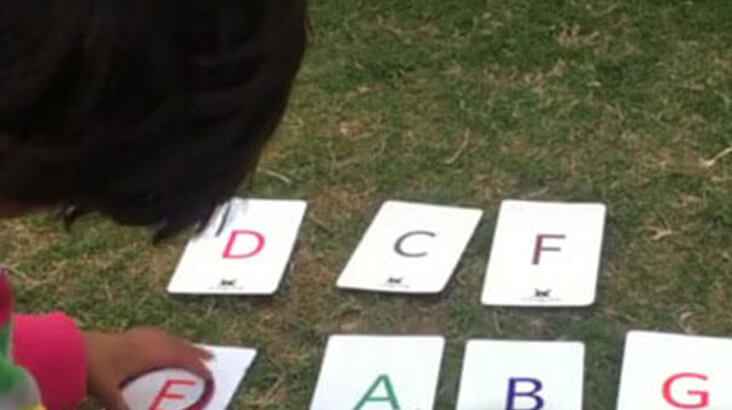
Revision & reinforcement improves learning in young children.Here is a fun way to revise alphabets. We were bored staying indoors, so we did this activity in the park!

What you need for this activity

-We have used alphabet flash cards, you can use, magnetic alphabets, chart or a mat with alphabets
-A bangle to make this activity interesting!

What you need to do

Spread some cards around the child

Explain to the child that she must place the bangle over the letter that you name. Now, you name an alphabet and let the child place the bangle over the letter. You can choose to go in the alphabetic sequence or say the letters randomly, depending on your child’s comfort

Skills Learnt:

  • Eye and hand coordination
  • Alphabets
    Happy learning at home!

Eye Symptoms Parents Need To Open Their Eyes To

Eyes are the most sensitive parts in our child’s body. Babies are totally dependent upon us, their parents. They cannot tell us that their vision is not clear or that they have difficulty in focussing upon things. But you as a parent will be able to figure it out. Older children can communicate better. But then again, you need to be vigilant. Be sensitive to warning signs and symptoms like sitting close to the TV or finding it difficult to read, even squinting or rubbing the eyes always. Vision problems in children become obvious between approximately 1.5 and 4 years of age. Problems that are identified early have a greater possibility of being treated successfully. Moreover, children who suffer from vision problems tend to have issues with progress at school.

There are other symptoms as well:

  • Babies tend to crawl incorrectly, frequently bumping into walls or furniture.
  • Tearing- This can happen in babies whose tear ducts are blocked. The eyes are filled with tears and mucus starts to form in the eyes.
  • Swelling or a painless bump on the eyelid may form due to a blocked oil gland.
  • Redness
  • Sensitivity to light, pain in the eyes, bulging or enlarged eyes- This implies that the pressure inside the eye is way too high. If not treated in time, it can cause blindness.
  • Droopy eyelids-In this situation, the eyelid is not open completely. This is due to weak eye muscles. This can lead to poor vision development.
  • Far sightedness- This causes difficulty in seeing objects that are close. But babies and children tend to normally have a small proportion of far sightedness.
  • White, yellow greyish material in the pupil- This might hint at an eye infection.
  • Difficulty in following objects and poor focusing-This also leads to reduced vision.
  • Near sightedness occurs when the child is unable to see objects that are far away. This is predominantly found in school going children.
  • Conjunctivitis or red eye is a common eye infection. The eyes are watery, itchy and the child feels uncomfortable.
  • Abnormal or excessive eye movement
  • Frequent headaches.

If any of these symptoms surface or your child’s eyes seem to look different, do get their vision tested.

A few points that need to be kept in mind are that up to about 3 months, our baby’s eyes tend to appear a little misaligned; there might be a little squint. Once they turn about 3 months old, they should be able to follow objects, like toys, successfully with their eyes, as it moves from one side to the other. Our baby should be able to establish eye contact and should be able to see clearly. If you sense any problem, whatsoever, visit your baby’s paediatric ophthalmologist. Remember the old adage, “a stitch in time saves nine”.

So parents, stay informed, be careful. Follow your child’s ophthalmologist’s advice, always. Avoid being casual about it. Moreover

, healthy food habits, appropriate physical activity and the requisite amount of sleep ensure that our children are healthy, head to toe.

Happy seeing