Picky Eating

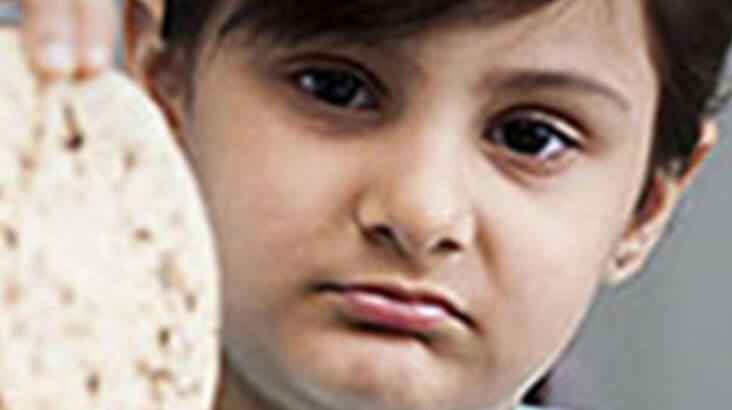
When it comes to eating, you might find your toddler acting a little fussy at times. There are a few possible reasons for this such as not liking the shape, colour or textures of certain foods. Wanting to be independent is also one of them. Your child is new to eating solid foods and may take some time to get used to it. They want everything to be familiar whether it’s sleep or play time. But when it comes to food they can be highly unpredictable. The good part is that they tend to get less picky as they grow older.

What you eat has a great influence on the child so it’s easy for you to set an example in front of her by eating the kind of food you would like her to eat. They develop a judgement of what’s safe and healthy by watching what you eat. It’s normal for toddlers to be fussy eaters or refuse new foods and this surfaces around the age of 1 year once they start to feed themselves. This could be possible because of the change in nutrition requirements as the growth rate in children is very fast in their first year and not as fast in their second year. They are also learning a lot of new skills like walking, talking, running, becoming more independent and learning to make choices on their own.

During such a period of change children often look for consistency as much as possible, including sticking to the same food. Hence, they create a fuss when it comes to trying new foods. Research has shown that the food preferences of parents are linked to those of their children so you should make sure to eat a healthy range of foods. Also, if you tend to be a picky eater it’s quite possible that your child will follow in your footsteps so it is best to avoid showing disinterest while trying new things. Letting your little one help you in preparing the meal can increase her interest in eating that particular food since she will have a hand in creating it. One should try to support the child’s independence when it comes to food. By giving in to a few demands and preferences, you will let your child feel a little more in control of her life. Instead of forcing the child to eat one thing, you could give her a choice between two or three healthy food items. One other thing you can do is try to make the food look more attractive by arranging it according to different colours, shapes and sizes.

Including one thing in the meal that your toddler is fond of can make a huge difference. But be sure that you don’t start making deals with your child when it comes to food. This can make the child accustomed to getting rewards for every little thing that you ask her to do. Try not to serve very sugary or fatty foods as an alternative for snacks because your child could completely stop having healthy foods. Encourage imaginative names for different types of fruits and vegetables which can infuse an interest in the child for them.
पराठे का नुस्खा

आओ पराठो के संग प्रयोग करे!

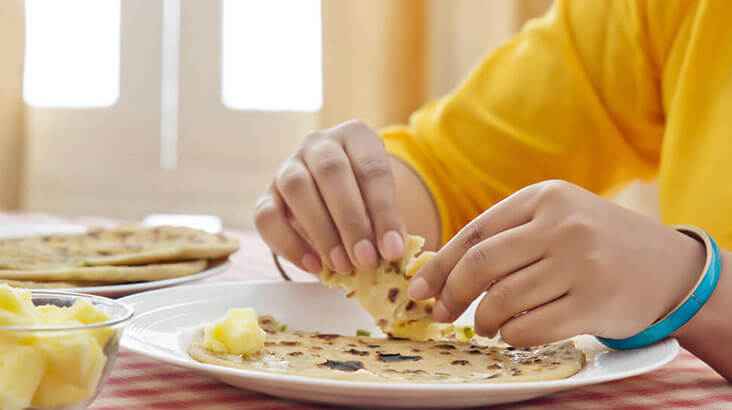
हम सब अलग अलग तरह के मसालो का इस्तेमाल करते है पराठे भरने के लिए जैसे फल, अंडे, सब्ज़ियाया इनका मिश्रण या ज़्यादा से ज़्यादा घी के जगह तेल से पराठे को सेक लेते है | मगर मेरे शेफ एक ऐसेस्वादिष्ट नुस्ख़ा लाए जिसकी मैने कल्पना भी नही करी थी और इस बात मे कोई अस्चर्य नही कीज़्यादातर अच्छे शेफ पुरुष हैं!

बहुत ज़िद्द और विनती करने पर, मेरे शेफ ने अंत मे मुझे अपने पराठे का रहस्य बताया वो भी अपनेअनोखे तरीके से, खाना पकाते वक़्त मुझे अपना सहयोगी बना कर! “पराठे का गुण“, जैसा की हम उसेकहते है, अब एक अहम् जगह रखता है सिर्फ़ मेरे चाव मे ही नही बल्कि मेरे नुस्खे की किताब में भी|

**बहू–आटा नुस्ख़ा** – गेहू, बेसन, ज्वार, बाजरा, रागी, जई सबका प्रयोग वे अलग अलग जोड़ी मे करचुके है | सबसे आसान और पौष्टिक तरीका आटे को स्वस्थ बनाने का!

**ज़्यादा कुरकुरा, ज़्यादा स्वादिष्ट**  हमने अजवाइन या सोंफ मिलने का सोचा होगा, किंतु वो पिसे हुएपटुए या मेवे को मिला कर आटा गुथ्ते है जिससे वह अधिक कुरकुरा हो जाता है | अक्सर पुदीना, कडीपत्ता, मेथी या धनिया मिला कर उसे और स्वादिष्ट बना देते है|

**सच्चा मिनरल पानी**– अंत में आटा गुथ्ते वक़्त वो दाल का पानी या चावल का पानी या दूध काइस्तेमाल करते है, जिससे पोशाक जल को अपने सार मे प्रयोग कर सके!

**घोल में घुलना** यह नुस्ख़ा मेरे लिए काफ़ी अस्चर्यजनक था! हमने हाल ही मे चुकंदर के स्वाद वालापिज़्ज़ा खाया था लेकिन ऐसा प्रयोग भारतीय खाने मे एक कुशल व्यक्ति ही कर सकता है! उन्होनेसब्ज़ियो और फलो को प्यूवरी या घोल की तरह आटा गुथ्ने मे प्रयोग किया – पोषक और अद्भुत स्वादहर दिन!

इन तरीक़ो का प्रयोग मैने तब किया जब अंत मे मुझे अपने बच्चे के लिए हाथ से खाए जाने वालेपकवान बनाए क्यूंकी उसका सीमित ध्यान और भूक के कारण अलग अलग तरह के खाद्यान औरपकवान मे उसकी दिलचस्पी ज़रूरी थी| अब यह हमारे परिवार का पसंदीदा व्यंजन है| एक ऐसा पकवानजो अपने आप मे एक पूरा भोजन है|

Crafts With Toddlers

Creativity can happen in all sorts of places not necessarily in a craft activity. Toddlers mind is creative without even trying so letting them be themselves and explore their brains and see what they come up with!

At the age of three and four, toddlers are generally not having full control over their body movements, their gross motor skills and fine motor skills are still developing and hence a perfect craft activity helps in formation of these body movements.

Introduce the use of scissors, paper, clay and paints to have the perfect bonding time with your child over the weekend.

Beware parents as craft activity can turn out messy but isn’t that what your child wants. Complete freedom to use all sorts of material like craft paper, glue, colors and see how they surprise you by creating something which was completely unimaginable.

When you plan to have a craft activity with your child, keep these tips handy to have the most joyful and creative experience with your children.

  • Allow your child to explore whatever it is that you give them, it could be the material or the time  or even it could be the place you are doing the craft activity let them choose ; let them be the boss.
  • Do not force your child to act or listen to your instructions in a certain way at this age kid’s creativity is more about having fun.
  • Do not expect to complete the project the same day when you started. As you are aware kids have a short span of attention and hence give them the freedom to come back to the craft whenever they want to, it could be the next day too.
  • Sometimes going to messy way works; kids love the fact that they have control over whatever is there on the table.
  • Try and introduce new material with a new craft activity, like handmade craft, different type of colors etc. Give them a new material every time.

It is important for us to understand that activities like these focus more on the process of creating something and exploring the minds rather than the outcome. So do not get depressed or disheartened if the outcome is not pretty or a beautiful piece rather compliment your child for the use of the colors and the little art piece that he or she has created.

Start with small exercises like drawing and painting, sticking between the lines coloring the circles etc. Lots of pasting are gluing activities are also introduced at this age.

Common Childhood Illnesses Like Cold

No matter how careful you are as a parent, it is very normal for babies to develop a common childhood illnesses like cold. Even though there are various vaccines available today for protection against some strains of viruses that cause symptoms of cold, there are many strains of viruses and bacteria causing common childhood illnesses like cold and cough. Although the illness doesn’t cause too much discomfort to the baby it is one of those concerns in children that parents almost always worry about.

Age and how it affects your baby

Your baby’s reaction to common childhood illnesses like cold will depend on the age when the problem occurs. Here is a look at how your baby may react to cold at various ages.

  • If your baby is less than six months of age, the cold is most likely going to be mild. Your baby may start by sneezing, followed by a stuffy or runny nose. In some cases, your baby may cough a little.
  • In case your baby’s nose is stuffy for a longer period of time, he or she may get cranky and uncomfortable, but this will go away soon.
  • For older babies, the symptoms may be a little more pronounced. Your baby may not show any signs at all initially, but may suddenly develop a fever. This could last for two to three days, after which your baby’s nose may start to get runny. This is when the cold will start to recede.

What happens when your baby has common childhood illnesses like cold?

There can be various reasons that cause your baby to develop a cold. From irritants present in the house to a host of germs and viruses, the possibilities are endless. However, the most common viruses that cause cold especially in babies are the picornaviruses, which also include the very common virus known as rhinovirus, also known as the nose virus.

  • Baby’s are prone to bouts of cold as their immune system is still very fragile and has not developed yet
  • The most common way that these viruses enter your baby’s body are through the nose and mouth. Each time they touch an object and touch their nose or mouth, the chances of an infection get higher.
  • Once the virus is inside your baby’s body, they reproduce in the lining of the throat or nose. When this happens, the body releases chemicals, and blood vessels leak fluids causing swelling. Also, the body produces mucus and triggers fever.

While a cold is not really a serious health condition, it is recommended that you consult your pediatrician.

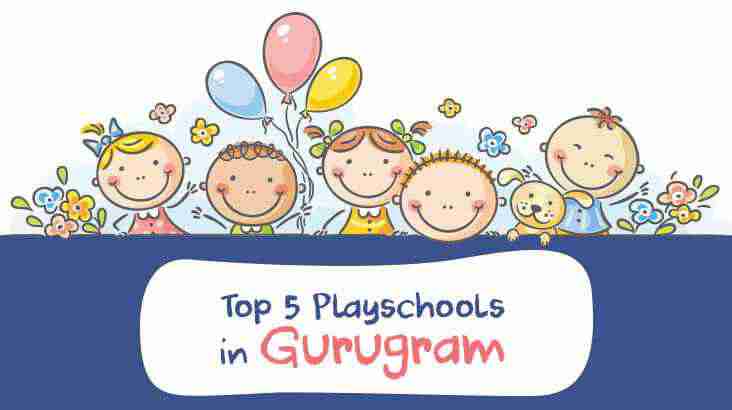
Early Education Of Your Child: The Top 5 Playschools In Gurgaon

In a wink your little ones grow up and are ready to go to preschool/playschool! The decision to send a child to a playschool or preschool is their parent’s decision. Childcare support at home, learning, the time that the parents are able to spend dedicatedly with the child are some of the key factors in this decision. Coming to the subject of playschool Gurgaon, we know that choosing a playschool in Gurgaon is a tough task.

We understand that, that taking time out to visit several playschools and to evaluate them is tedious and time consuming. However, you wouldn’t want to leave any stone unturned before deciding on a playschool for your child. You want to make a well-informed decision and are willing to go to any length to satisfy yourself about your choice or to arrive at a choice. As you feel the need to talk to parents who send their children to these playschools and want to hear the inside story, find out about the kind of safety measures that the playschool deploys, its teachers etc and then make a choice, we decided to do some of this work for you.

Playschool Gurgaon:

If you are considering a playschool in Gurgaon for your child, this is a list that you must read. Mumpa team spoke to parents, visited several playschools and rated the playschools in Gurgaon on certain parameters before compiling this list.

The team clearly prefers boutique, standalone playschools in Gurgaon like Pumpkin House Playschool, over multi outlet playschools. These playschools have one or few centres and their management teams are closely involved not just with the running of the school, but also with the classrooms activities of these playschool. This makes a big difference. We can’t forget that we are selecting schools for very small babies who can just about hold their gait. So, the more closely a playschool is run the better it is for the children and the parents.

Based on our liking and research here is a list of the top 5 playschools in Gurgaon. Before you decide, we suggest you visit the centres yourself and talk to the staff and teachers, so that you can make an informed choice. Simply read on to find out about the best playschool Gurgaon.

1. Pumpkin House Playschool Gurgaon

Address: A Block Shushant Lok Phase-I Gurgaon, Haryana

Contact: http://pumpkinhouseplayschool.com/  +91-124-4045179-80

Email: pumpkinhouse2012@gmail.com

Teaching methods: The playschool offers classes from play group (age 1.8) up to kindergarten level (age 5). Pumpkin House playschool also offers day care facilities from 9 am till 6:30 pm. It follows the play way and montessori methods of teaching. It has various activity rooms where children are encouraged to think and make decisions. The playschool also has classes on on pottery, sculpting, clay modelling, singing, dancing, sports, and so on for holistic development in a child. They also run a mother toddler program called Music & Move.

Transportation facility: Yes

2. Pallavan Sohna Road, Gurgaon

Address:Uppal’s South End, S-Block, Sector 48-49 Sohna Road, Gurgaon – 122001

Contact:http://www.pallavan.com/index1.html , +91-8800311195

Email:sapnasyal@pallavan.com

Teaching methods:The playschool works as per the Early Years Development program in the preschool years, starting from age 2. In addition to the regular playschool class, it also offers a day care program.

Transportation facility:No

3. The Shri Ram Early Years, Gurgaon

Address: Sector 48, Vipul Greens, Gurgaon – Sohna Road, Gurgaon-122001, Haryana

Contact: http://www.tsey.in/  +91-8882 676 553, +91-9953 613 785

Email: admission.tsey@shrieducare.com

Teaching methods: The curriculum focuses on developing communication skills, improving self-development, encourages hands-on learning, improves critical thinking skills and helps the child to develop sensitivity to the surroundings, along with regular learning. The playschool also has a day care program.

Transportation facility: Yes

4. The 6th Element, Gurgaon

Address: B Block, Adjacent B Block Garden, South city – I, Gurgaon – 122001

Contact: http://www.sixthelement.net/ 0124-4086466, 85272-74695

Email: preschool@sixthelement.net

Teaching methods: The playschool uses various fun ways of teaching that include regular letters and numbers, uses gadgets and gizmos and encourages art and creativity, along with speech, expression and more. It also aims at making children good at various life skills. In addition to the preschool/playschool facility it also offers day care facilities.

Transportation facility: Yes

5. Ardee Playschool, Gurgaon

Address: Sector 52, Ardee City, Gate no. 3, Gurugram, Haryana 122001

Contact: http://www.theardeeschool.com/gurgaon/index.html, 0124-42001102, 4200103, 9811110042

Email:contactus@theardeeschool.com

Teaching methods: The playschool follows the Montessori program. They have a very unique method of explaining mathematical concepts from a very young age, along with teaching language, arts, environmental issues, general knowledge, leadership techniques and more.

Transportation facility:No

Are you Pregnant? Check For These Top 10 Signs Of Pregnancy

Wondering whether you are pregnant or not and if it’s time to take the test? Taking a pregnancy test too early may not always give you the most accurate results. So how do you really know if you are pregnant or not, even before you take the urine test? Here is a list of pregnancy signs and symptoms that start showing up even before you get a positive result on home pregnancy test kits!

Here are the top 10 pregnancy signs that may be a good indicator of whether or not you are expecting. The more signs you have, the more reason you will have to believe you are pregnant.

Top 10 pregnancy signs which indicate that you are pregnant

  1. Tender breasts – This is often one of the earliest signs. Your breasts will feel too sensitive to touch. You may suddenly feel they are fuller, and getting into your regular bra seems difficult.
  2. Darker nipples – The area around your nipples, called the areola, will get darker, and you will notice the circular area around your nipples is suddenly way darker than it ever was.
  3. Sudden fatigue – No matter how much rest and sleep you get, you will still feel tired and may want to spend the day in bed. This is mainly because of the change in hormone levels.
  4. Nausea – Suddenly, all those smells in the kitchen will make you want to throw up. You may find it difficult to cook, and even more difficult to eat. And yes, the term ‘morning sickness’ unfortunately does not mean it is restricted to just morning, but could be any time of the day or night.
  5. Increased urination – If you are pregnant, you will need to urinate more frequently and urgently. This is because your body will produce extra fluids now and make your bladder work more.
  6. Lower back pain – If you never had back ache before but now do, it means the ligaments around the area are loosening up. This is your body’s way of preparing for the baby.
  7. Abdominal pain – This also means that your uterus is stretching to make space for the baby.
  8. Bloating – You will find it difficult to get into your regular clothes. This is due to bloating, the way it happens when you get your periods.
  9. Mood swings – Happy, sad, excited, low, depressed, crying, irritated – you will switch through them all!
  10. Dizzy – You may feel light headed and that you are about to faint, and may have to sit down to avoid falling.

Benefits Of Ayurvedic Baby Massage Oil: Why It Is Better Than Other Oils

With the birth of a baby, a mother is also born. Although you and the baby had been living together for the last nine months, it is only now you can hold and nurture your child. Massage is one of the best gifts you can give to your child. Apart from better development of your baby’s muscles and bones, there are various other benefits of baby massage. It can relieve pain and stress, helps protect against dry and rough skin, help in deep breathing, and help the baby to sleep better.

Giving the right massage to your baby is important. But choosing the right oil is equally important. Various types of baby oils flood the shelves of supermarkets. To choose from such a broad range can be a challenge for a new parent. They are in a dilemma as to which oil is best suited for their kid. There are studies that highlight how ayurvedic baby massage oil benefits babies.

There are various synthetic oils available in the market. Synthetic oils may contain chemicals or use chemical methods for preparation, which may be harmful for your baby’s delicate skin. Mineral oils are chemical oils can have adverse impacts on your baby’s skin. Chemical oils may also contain parabens, which are not considered safe. Minerals oils are synthesized using chemical methods. Before investing in a baby oil, check the ingredients carefully for any harmful chemical or preservatives.

Ayurvedic baby massage oil benefits babies not in one, but several ways. Natural or Ayurvedic oils could be preferred choice over chemical oils.

Ayurvedic Baby Massage Oil Benefits:

Ayurvedic oils not only moisturize your baby, but the rich ingredients can play a vital role in your child’s overall development. These are fortified with the goodness of additional natural ingredients. These ingredients benefit your baby in many ways.

Ayurvedic baby massage oil benefits babies in their growth and development. Infact, massaging the baby with an ayurvedic massage oil has been found to be more beneficial than massaging with regular oil. Along with the physical benefit of the massage, the herbs that the ayurvedic massage oil contains, strengthen the bone and muscles. This helps boost the overall growth in the baby.

A Good Ayurvedic baby Massage Oil With five beneficial ayurvedic ingredients:

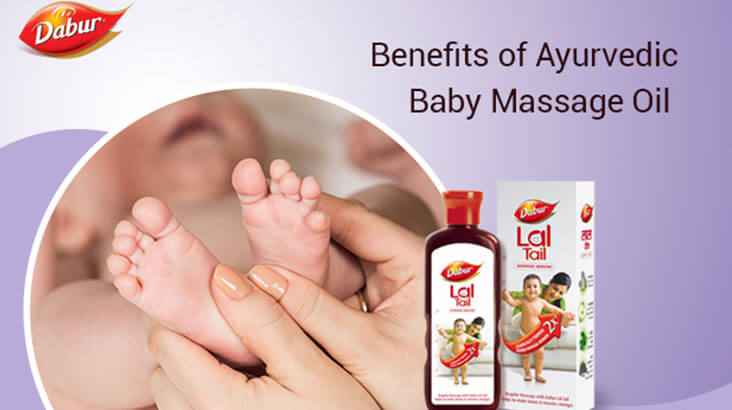
Dabur Lal Tail, is an Ayurvedic oil that carries the goodness of sesame oil along with other herbs which help in the overall growth of your baby.

It’s bright crimson red colour comes from the herb Ratanjot, that helps prevent skin diseases. It has Sankhpushpi, which helps protects the baby against skin diseases and general weakness. Camphor, which is also present in Dabur Lal Tail helps in improving local blood circulation. Another important constituent of the oil is Urad or black lentils which nourishes the muscles.

Clinical research done in babies up to 6 months of age proves that massaging a baby with Dabur Lal Tail helps in attaining two times faster physical growth in the baby in comparison to no massage oil.

Ayurvedic baby massage Oil Benefits a baby in several ways. Massage is a new experience for your new-born. Try and involve them in the massage and make it fun and playful. In the initial years, you may have to make baby sounds to attract the attention of your baby and engage him/her. Talk to your baby, sing with them, and even tell them stories. These engaging moments will have a positive effect on your baby’s physical and emotional health. “Massage is a way to a happier and healthier life.” Happy parenting!

Massage Of A New Born Baby

Maalish or massage of a new-born, has an effective impact on the growth and development of your baby. You can start with a baby massage from as soon as birth and continue it for as long as your baby enjoys it and you are able to create time for it.

Maalish fulfils the physical, mental, and emotional needs of your baby. It also creates an opportunity for the parent to spend time with the baby, where they can talk and bond together. Surprisingly, the babies never lose focus while they are being massaged! They keep an eye on the person giving them a massage! The parent can enjoy the undivided attention of their baby during massage time.

There are a few things which every parent/caregiver should bear in mind at the start of the massage:
•Hygiene of the person who is massaging the baby
•Choice of massage oil
•Massage Strokes

Hygiene of the person who massaging the baby

Washing ones hands clean before one massages the baby is a must. Use a hand sanitiser too. It will ensure that your hands are germ free. Infact, parents and caregivers should sanitize their hands each time they  touch or hold the small baby.

Some parents may opt to use an expert baby masseuse or maalishwali to give the baby a massage. It is a personal choice that a parent may make for several reasons. However, as these maalish experts may be interacting with many babies in a day, they could be vectors of infections from one baby to the other. Therefore, one must follow a strict routine of washing and sanitising hands.

Also, remove bangles, bracelets, rings or any ornaments that you are wearing in your hands. These could poke or scratch the baby’s delicate skin during the massage. Remember to keep your nails clipped.

Choosing the right oil for baby massage

Newborns are delicate and tender miniature human beings. You should double check any product you decide to use for baby massage. Carefully choose the oil that you will use for the massage. Refrain from using synthetic oils or chemical based products. The best way of giving a massage is by oiling your baby with whole seed natural oils which carry the goodness of the earth.

‘Kaumarbhritya’, the branch of Ayurveda that deals with the growth of the child from pre-conception to adolescence, projects light on many natural oils. It recommends coconut, sunflower, olive, sesame oil and ghee. Sesame is a whole seed natural oil that penetrates down to many tissue layers and nourishes deeply during baby massage.

You can use a good ayurvedic oil which has been fortified with natural ingredients that help in the baby’s overall growth.

Using the right strokes for baby massage

The tender body of babies will respond happily to gentle upward strokes and a light-handed massage. One needs to gently massage the baby’s skin.

Skin stimulation improves brain body coordination. Massaging sends a stimulus to the brain, which responds to the stimuli by building new synapses. This invigorates the central nervous system and fosters mental growth in the baby. Massaging also helps the brain produce more serotonin, a happiness hormone that reduces the production of cortisol, a stress hormone.

Gently massaging a baby’s belly in the clockwise direction can help reduce colic and flatulence. A massage followed up with a warm bath can help the baby sleep too!

You may have heard many popular myths around baby massage. Like, pulling up the nose while massaging can shape up the nose or a proper round shape of the head is due to the right way of massaging. These prevalent myths have no scientific proving.


Physical significance of baby massage

Masssaging a baby, soothes the child, it relaxes them and often lulls  them to sleep. Massage has proven to be an effective way to regulate the various systems of the body, such as respiratory, digestive, circulatory, and nervous.

A good and effectively done baby massage benefits babies in several ways. They become emotionally connected to the massaging parent. During a baby massage, the child gesticulates and emotes to connect with the parent. This meaningful interaction helps the child’s psychological well-being. They start developing trust and identify their parent(s) as their primary nurturer and care giver.

So, do a baby massage for the right reasons with the right expectations. Bond with her, love her, that is what she needs the most to grow into a happy individual. Express your love with the gentle strokes of maalish, deepen the parent – child bond while you help her grow faster.

Hand, Foot, Mouth Disease: Symptoms, Home Remedies, Cures

Seeing your nipper seething with pain is the worst sight for any parent. As an extremely loving and doting parent, we want to create a utopia for our kids where there are no threats from any disease. But with kids, nothing can be foolproof. So, if we cannot make things work our way, the least we could do is to be aware of the dangers around. Not all diseases have a readily available cure; therefore, we should learn about their symptoms and prevention methods before the nascent infection takes an ugly turn.One such disease is the hand-foot-and-mouth disease (HFMD). Although it can affect people of any age, it is most common in children. There is no specific season for HFMD but there are more cases in summer and fall. It is a mild condition that does not last for more than a week. Read on to know about Hand, Foot, Mouth Disease: Symptoms, Home Remedies, Cures.

Causes of HFMD

HFMD is mostly caused by coxsackievirus from the Enterovirus family. This disease is highly contagious, spreading from an infected person through even coughing or sneezing. Besides, it can also get transmitted through infected feces while changing diapers or when your child gets stool on their hands and touches infected objects or put them in their mouth.

Hand, Foot, Mouth Disease: Symptoms, Home Remedies, Cures are simple and can be followed easily at home.

Symptoms of HFMD

Generally, it takes three to seven days for the infection to develop. This period is known as the incubation period. After a week of initial infection, your child may experience fatigue, sore throat, and high fever. This is followed by blisters and rash in or on the mouth, hand, foot, buttocks, and legs. Your baby may also suffer from poor appetite and headache.
Diagnosis of HFMD
There is no specific test for HFMD. However, doctors can tell if the child is suffering from the infection by looking at the symptoms, blisters, and rashes. In some cases the doctor may take a throat swab or stool sample to confirm the diagnosis.

Treatment of HFMD

There is no specific treatment for HFMD. However, the doctor may prescribe few ointments to ease the symptoms and soothe the blisters and rashes, pain killers like acetaminophen or ibuprofen, and medicated syrups and lozenges for sore throats.

Simple home treatments can also provide relief from HFMD:

1.Sucking on ice or popsicles.
2.Drinking cold beverages.
3.Avoiding spicy, salty, and acidic food.
4.Avoiding citrus food like fruits, soda, and fruit juice.
5.Drinking coconut water.
6.Eating mashed banana.
7.Eating steamed and pureed vegetables.
8.Drinking plenty of fluids.
9.Eating biscuits dissolved in milk.
10.Eating kheer/custard.

Prevention of HFMD

The best defense against HFMD is practicing hygiene.
1.Wash your child’s hand regularly using liquid soap.
2.Teach kids not to put their hands in or around their mouth.
3.Sterilize toys, pacifiers, and other children belongings.
4.Disinfect common areas at home regularly.
5.Wash your hands especially after diaper change.
6.Do not send your infected child to school; this will avoid spreading the disease.
7.Cover your mouth while sneezing or coughing.

Children are the ones who transform dull environs to vibrant ones in our homes. Their illness can suddenly bring melancholy to our lives. Teach the benefits of cleanliness to your little monster and ensure proper hygiene to keep them away from HFMD.

Hope this list of Hand, Foot, Mouth Disease: Symptoms, Home Remedies, Cures will help you in keeping the disease at bay.

You can check more about HFMD here.

Raise Smart Kids: Find Out How DHA Can Make Your Kid Smart!

We as parents are always concerned about our kids and want the best for them. You would have seen advertisements mentioning that a product has DHA. Have you ever wondered what DHA exactly is? Why it is important for your child? This infographic will help you understand how DHA can make your kid smart.

DHA (docosahexaenoic acid) is an Omega-3 fatty acid essential for the all-round development of your kid. This nutrient is also known as the “brain food.” It ensures that the cells in the brain, eyes, and heart develop and function properly.

Importance of DHA in child’s brain development

DHA forms brain matter

DHA forms approximately 35% of the structured fats in the gray matter of the brain and 97% of the Omega-3s in the brain. It is the major structural component of the cerebral cortex. It is the building blocks of brain cell membranes and nerve cells.

DHA makes brain fat & promotes integrity of brain

The human brain is approximately 60% fat, which determines the brain’s integrity and its ability to perform. An imbalance of the essential fatty acids is directly related to impaired brain performance and disorders like depression, dementia, and ADHD (attention-deficit/hyperactivity disorder). This makes it a very important nutrient in your child’s diet for brain development.

DHA boosts memory

It keeps the cell membranes soft and flexible. It holds the receptors in place. The soft and flexible membranes are capable of altering the shape of receptors. This facilitate the smooth transmission of information between neurons and develops neuroplasticity

What calcium is for bones, DHA is for the brain. From their IQ to face recognition, better eye–hand coordination,  to giving a jumpstart to the production of hormones that are vital for brain development. Pregnant and breastfeeding mothers should also take optimum amount of this nutrient. It ensures better brain development of the fetus and prevents postpartum depression.

It is an essential element to build and preserve cognitive and mental health of your child. It facilitates neurotransmitter activity, optimizing the use of feel-good neurotransmitters like serotonin and dopamine. It also increases the level of the neurotransmitter acetylcholine, which improves spatial memory and the focus span of your child.

The main food source of DHA is seafood, like salmon, mackerel, herring, sardines, and bluefin tuna. The vegetarian options are broccoli, cauliflower, and leafy green vegetables like spinach, kale, and collard greens. Papaya is one of the few fruits that contains a high percentage of Omega-3 fatty acid.

Most of our child’s brain is developed by the age of 5 years. Proper nutrition in their diet plays a key role in his/her overall development. Eating habits influence your child’s memory, concentration, comprehension, judgment, intellect, mood, and emotions. Remember “to eat is a necessity but to eat intelligently is an art.” So, inculcate right eating habits and make sure your child gets the optimal level of DHA in his/her food.